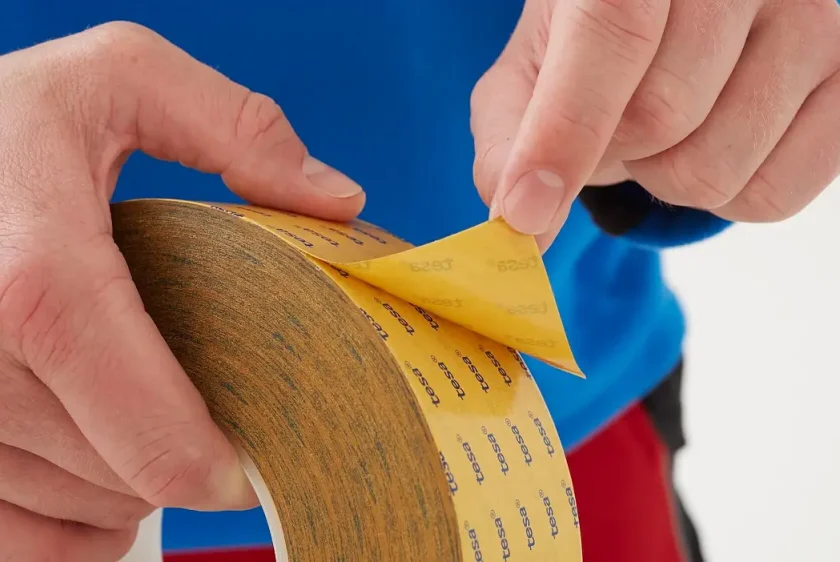
Double-sided tapes are an essential component in many industries, offering a quick, clean, and efficient way to bond materials without the need for screws, rivets, or messy adhesives. Among the most common types are PET (Polyethylene Terephthalate) and PVC (Polyvinyl Chloride) double-sided tapes. While both are widely used, they serve different purposes depending on material characteristics, environment, and bonding needs. Understanding their differences is key to selecting the right tape for your application.
PET double-sided tape is made using a polyester film as the carrier, coated on both sides with strong adhesive. It is known for its excellent dimensional stability, high tensile strength, and resistance to temperature, chemicals, and aging. The PET backing makes it suitable for precision applications where consistent thickness and clean removal are required. It is often used in electronics, automotive assembly, and high-performance industrial settings.
PVC double-sided tape uses a flexible PVC film as its base material, also coated with adhesive on both sides. PVC offers a more elastic and conformable structure, making it better suited for uneven surfaces and applications that demand more flexibility. While it may not offer the same high-temperature resistance as PET, PVC tapes are valued for their ease of application, good adhesion, and affordability. They are commonly found in signage, general-purpose mounting, and insulation-related uses.
The primary difference lies in the properties of their carrier films. PET tapes are rigid, dimensionally stable, and resist stretching, which makes them ideal for precise alignment and long-term performance. In contrast, PVC tapes are more pliable and conform easily to textured or irregular surfaces, which helps when working with curved or uneven materials. Additionally, PET tapes typically handle higher temperatures and exposure to harsh chemicals better than PVC, while PVC offers better flexibility and ease of use for light-duty bonding tasks.
| Feature | PET Double-Sided Tape | PVC Double-Sided Tape |
|---|---|---|
| Base Material | Polyethylene Terephthalate (PET) | Polyvinyl Chloride (PVC) |
| Flexibility | Rigid and dimensionally stable | Flexible and conformable |
| Temperature Resistance | High – suitable for heat-exposed areas | Moderate – not ideal for high-heat conditions |
| Chemical Resistance | Strong resistance to solvents and aging | Moderate resistance |
| Best Use | Electronics, automotive, industrial | Signage, construction, general mounting |
| Cost | Higher | More economical |
| Surface Compatibility | Best on smooth and flat surfaces | Better for uneven or textured surfaces |
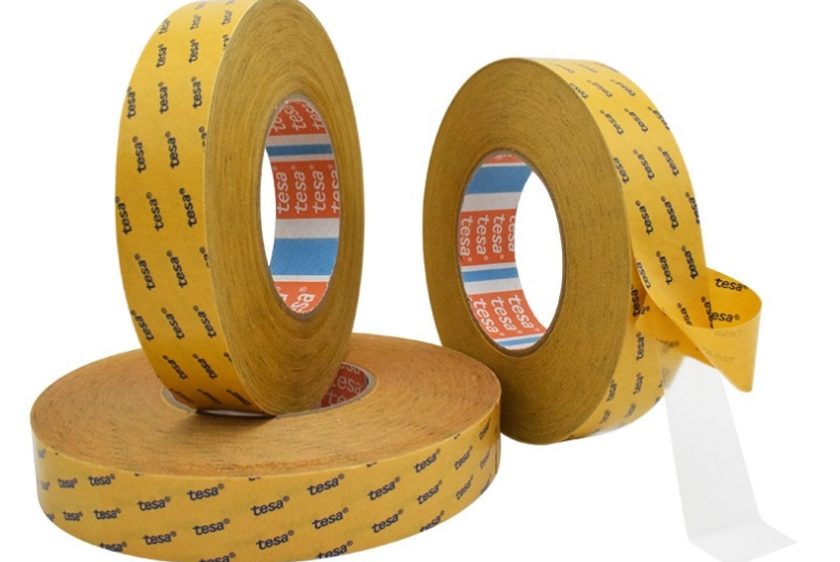
PET double-sided tapes excel in strength, thermal resistance, and durability. They maintain their form under stress, making them ideal for high-load applications. However, their rigidity may pose challenges in applications requiring a more flexible bond. PET tapes are also slightly more costly than PVC options due to their high-performance features.
PVC tapes shine in applications where flexibility and cost-effectiveness matter. They are easy to apply, especially on uneven or contoured surfaces, and provide reliable bonding for lighter materials. However, they are less resistant to heat and may degrade faster when exposed to UV or harsh chemicals over time.
PET double-sided tapes are widely used in electronics, particularly for bonding display panels, securing batteries, and assembling internal components. Their stability under heat and resistance to solvents make them suitable for devices that generate heat or require strong adhesion in confined spaces.
In the automotive industry, PET tapes are preferred for attaching emblems, trims, and parts that undergo frequent temperature shifts. They are also ideal for industrial splicing and lamination, where consistent adhesive performance and dimensional accuracy are critical.
PVC double-sided tapes are ideal for signage and display applications, where lightweight materials need to be mounted with flexibility. Their ease of use and ability to conform to textured surfaces make them a good fit for temporary displays and promotional installations.
In construction and insulation, PVC tapes are used for fixing vapor barriers, sealing air gaps, and attaching lightweight panels. They also find utility in crafts and packaging, where a balance of adhesion and flexibility is more important than long-term durability.
When deciding between PET and PVC tapes, several factors should be taken into account. Temperature tolerance is a key consideration. For environments involving heat exposure, PET is the safer choice. Surface texture also plays a role. If the surface is rough or curved, PVC may perform better due to its flexibility.
Durability expectations, chemical exposure, installation method, and cost sensitivity should also be evaluated. PET tapes may require a slightly higher budget but deliver better performance for demanding applications. PVC tapes, on the other hand, offer a practical and economical solution for everyday use.
Choosing between PET and PVC double-sided tapes comes down to understanding your specific application needs. PET tapes offer strength, precision, and durability under heat and stress, making them perfect for high-performance environments. PVC tapes, with their flexibility and cost efficiency, are ideal for light-duty bonding and general-purpose applications. By evaluating your project requirements, you can make an informed choice that ensures effective and lasting results.
Explore our full range of double-sided PET tapes and double-sided PVC tapes at VST Insan to find the right fit for your application.